2025
| Component Design
| Merit
LAST Architects
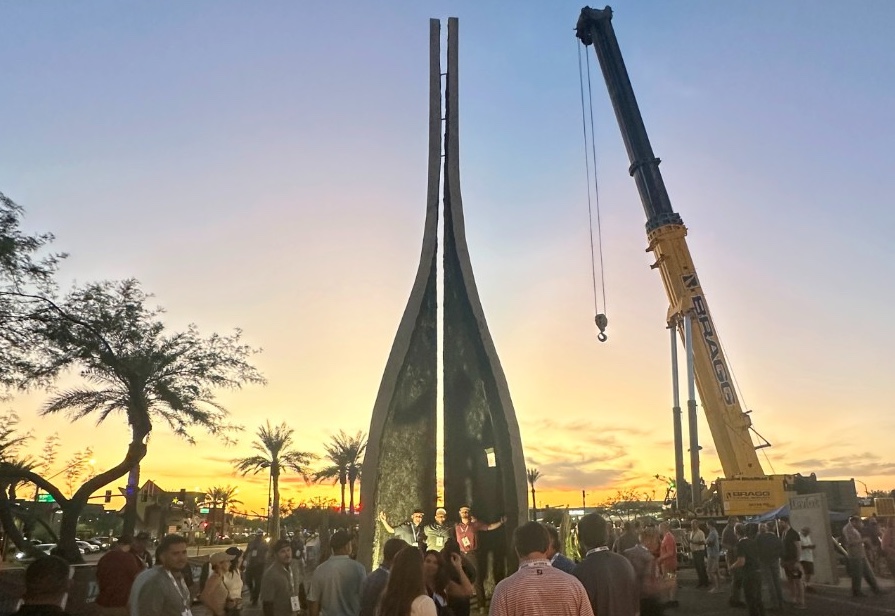
In 2024, the Tilt-Up Concrete Association (TCA) Expo and Convention, the premier event for professionals in the tilt-up concrete industry, celebrated its 25th anniversary in Phoenix, Arizona, a rapidly expanding market for tilt-up construction. To mark the occasion and welcome attendees, Tilt Lab, the philanthropic arm of the TCA, commissioned the authors to design a demonstration pavilion that highlights the unique qualities and untapped potential of tilt-up concrete.
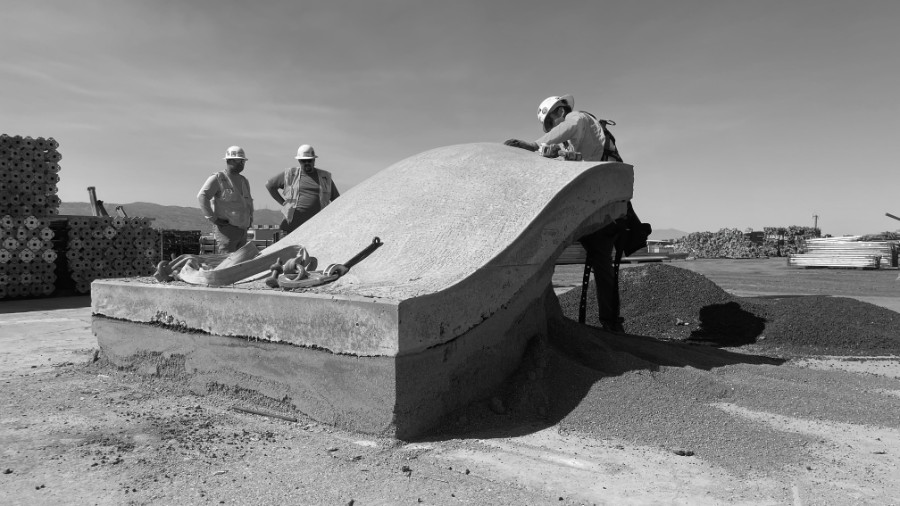
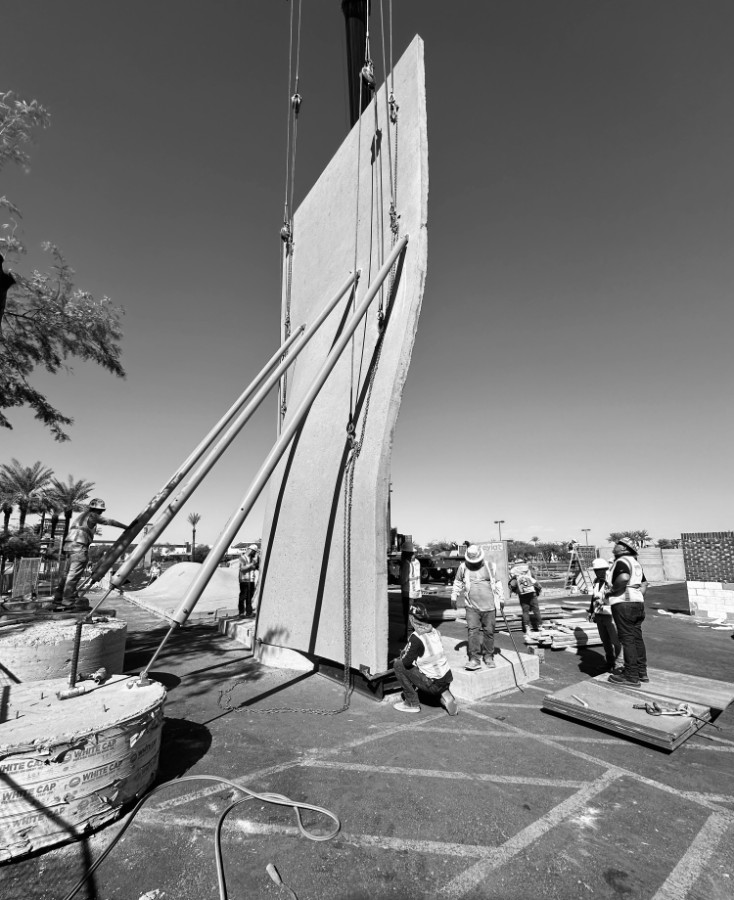
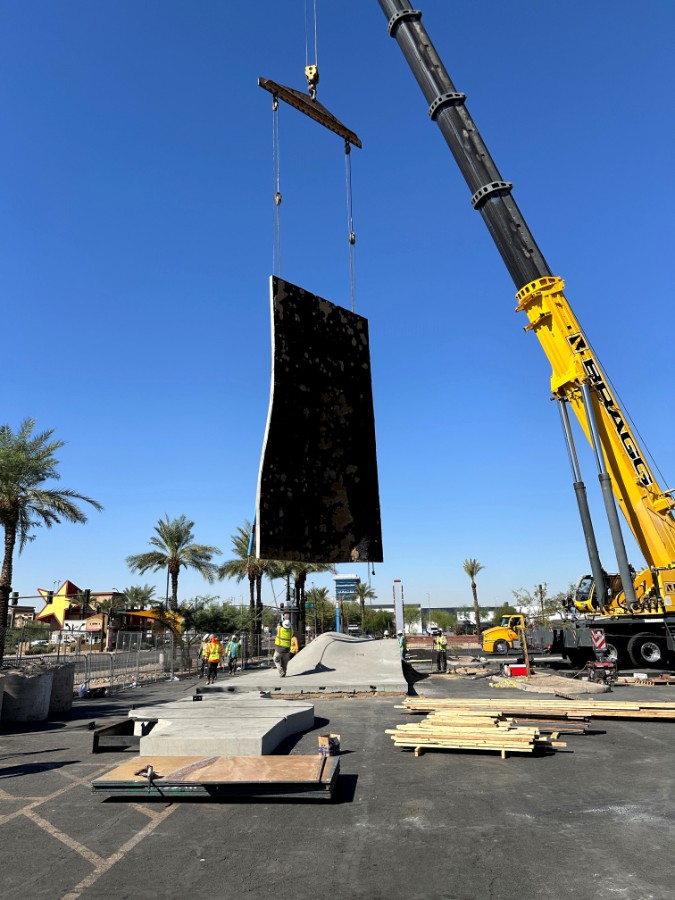
Conceived, tested, and built in six weeks, the demonstration pavilion explores the formal, spatial, and material possibilities of the tilt-up construction system, shaped by the distinctive conditions of the desert environment. Drawing inspiration from local geology and architectural precedents like Taliesin West’s Desert Masonry, the project challenges the conventional flatness of tilt-up wall panels by introducing a third dimension, using earth as a formwork. As one of the most primitive and fundamental construction materials, soil offers an efficient and environmentally sensitive mold-making system.
The incorporation of a third dimension enhances the structural rigidity and stability of the tilt-up concrete panels while providing greater design flexibility. By enabling the fabrication of complex geometries using accessible and sustainable means, this method redefines the possibilities of concrete wall construction.
Additional design explorations focused on finishes, apertures, and the spatial effects created through varying degrees of material refinement and panel arrangement. The self-supporting form of the double-curved panels creates a narrow crevice of light between them, enhancing spatial depth and contrast. Inside, the panels are lined with scoria aggregate, offering a tactile counterpoint to the smooth, troweled exteriors and enriching the sensory experience.
The empirical approach used in this study demonstrated the full-scale feasibility of the proposed method, effectively validating the concept. Its versatility enables a wide range of panel forms and configurations, offering a practical and sustainable alternative for creating architecturally expressive, load-bearing building envelopes.
See project photos
Architecture Firm
LAST Architects
Additional Consultants
Suntec Concrete, Needham DBS, Tilt Lab
Location
Glendale, Arizona