2025
| Twenty-Five Year Award
| 25 Year
Tim Hursley
How does an architect tolerate living in suburbia? As with any community, there are opportunities growing in the cracks of conformity waiting to be recognized.
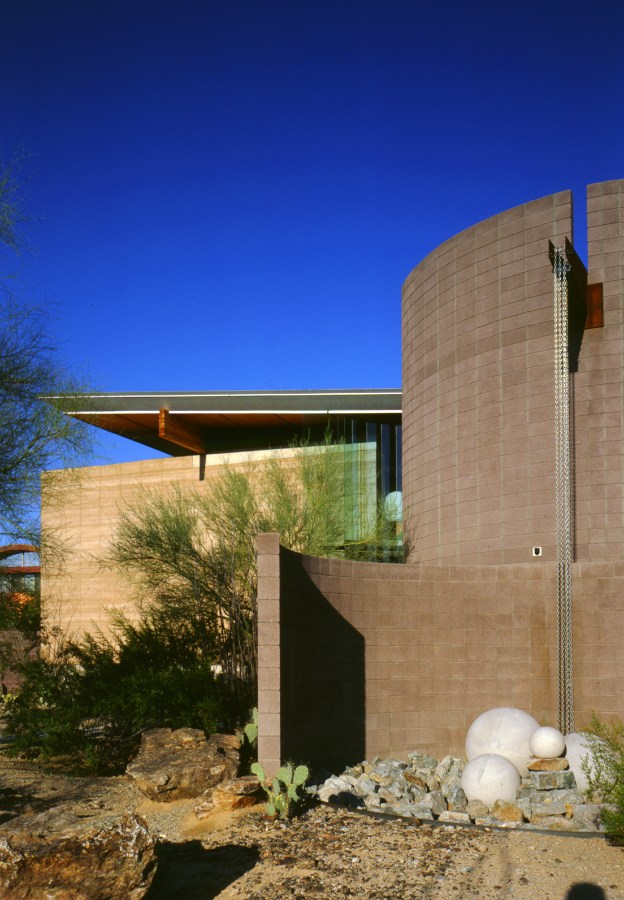
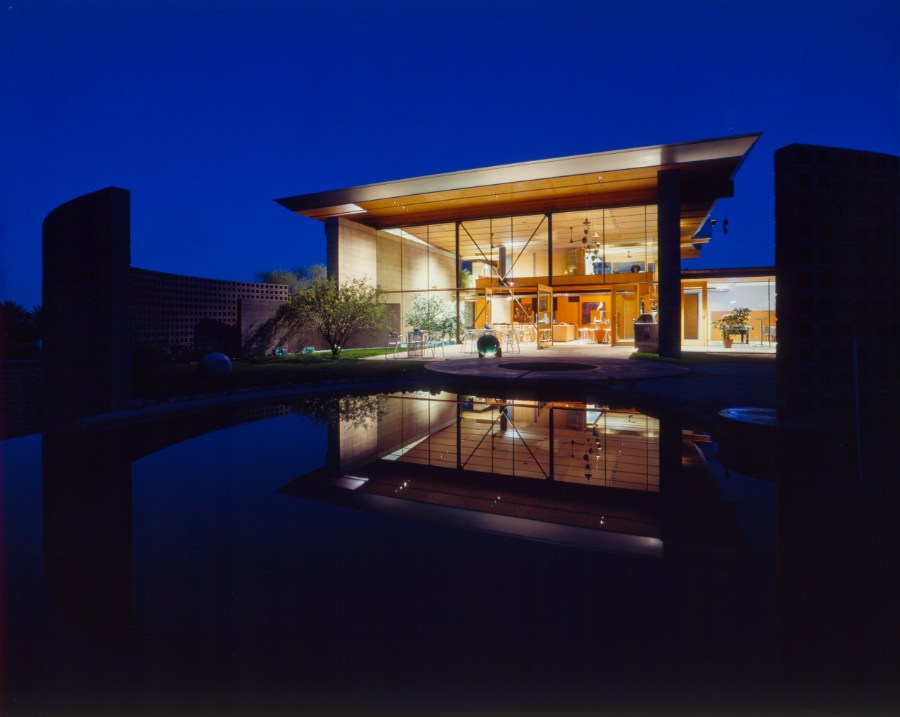
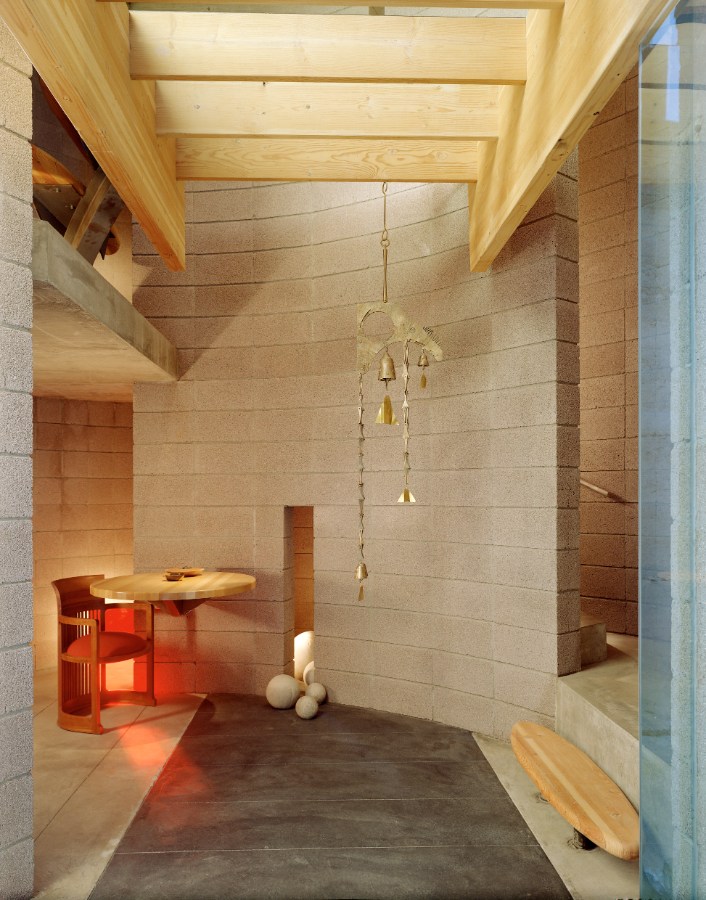
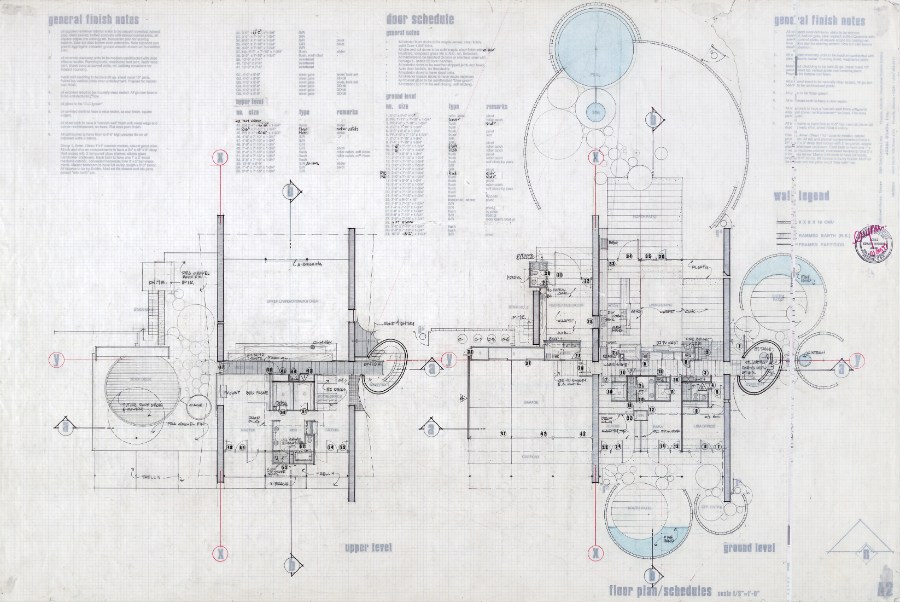
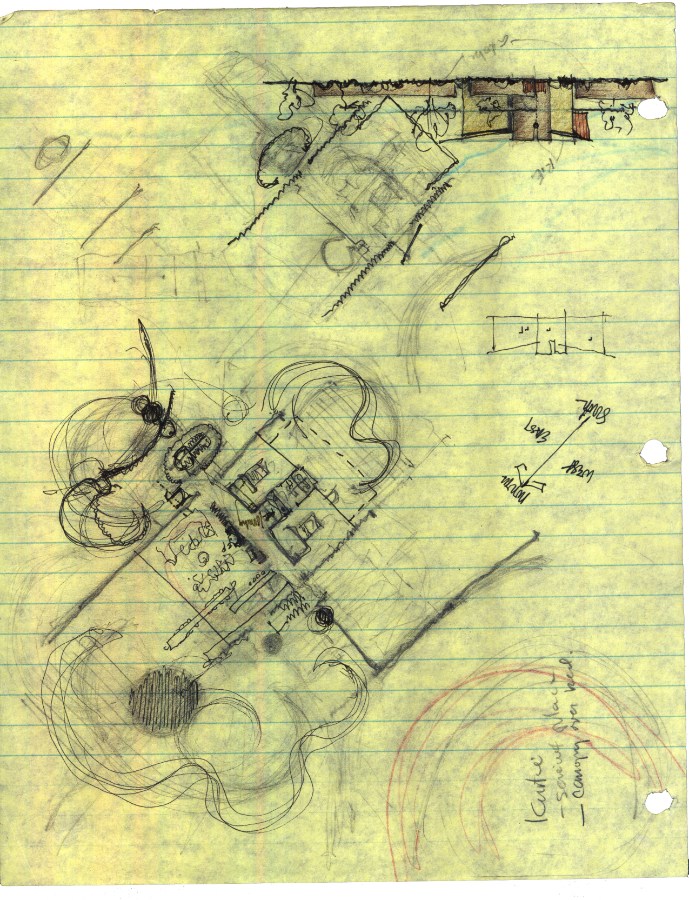
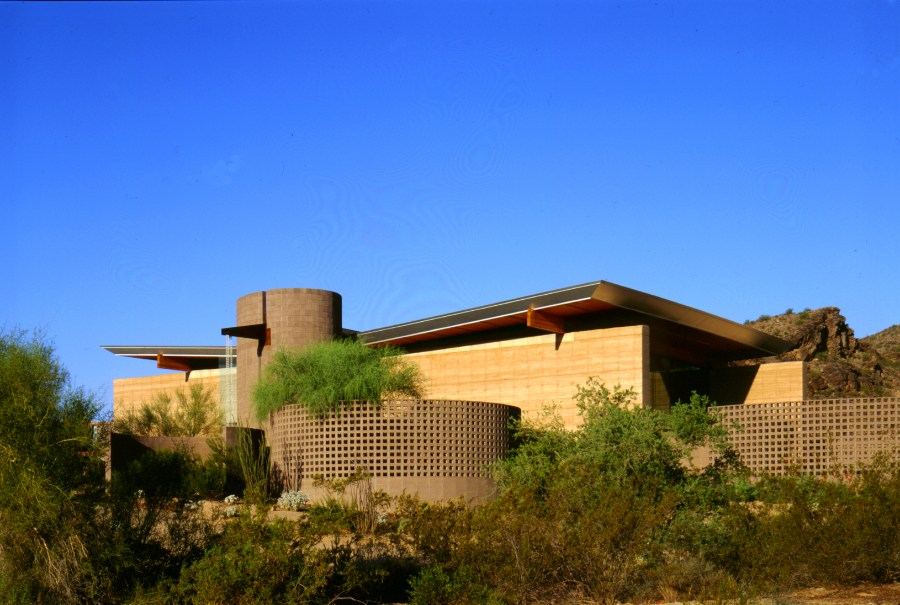
Completed in 1998, this home is situated on a one-quarter-acre suburban lot—a site that has been vacant for decades. A massive water storage tank west of the residential lot posed a view challenge for any conventional house design. Due to the perceived cylindrical blemish, the typically coveted and expensive preserve lot adjacent to an 18,000-acre nature park was undervalued and overlooked. A quick site analysis revealed the orientation diagram that informed what would become a rammed-earth example of fearless thinking.
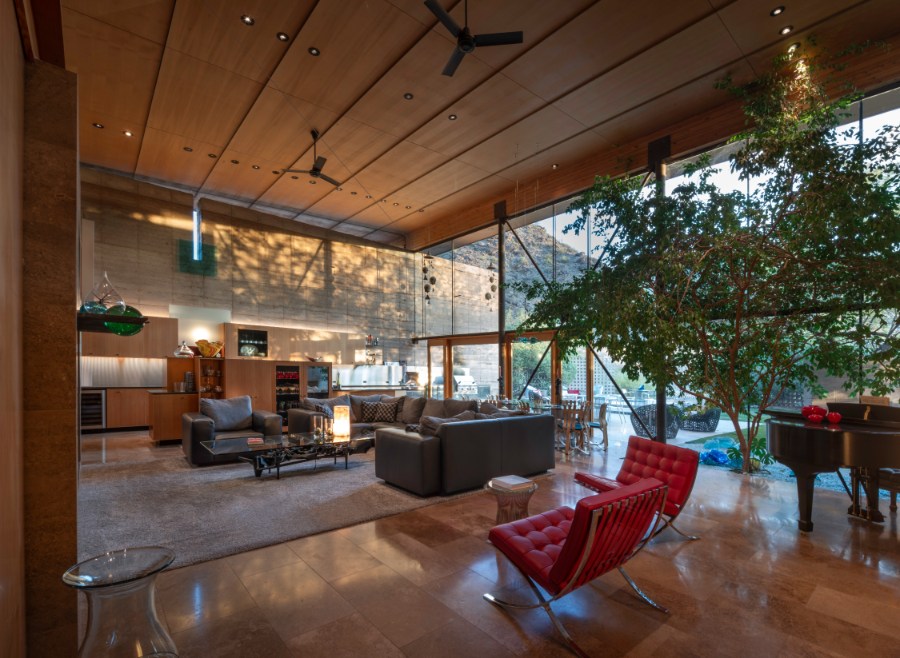
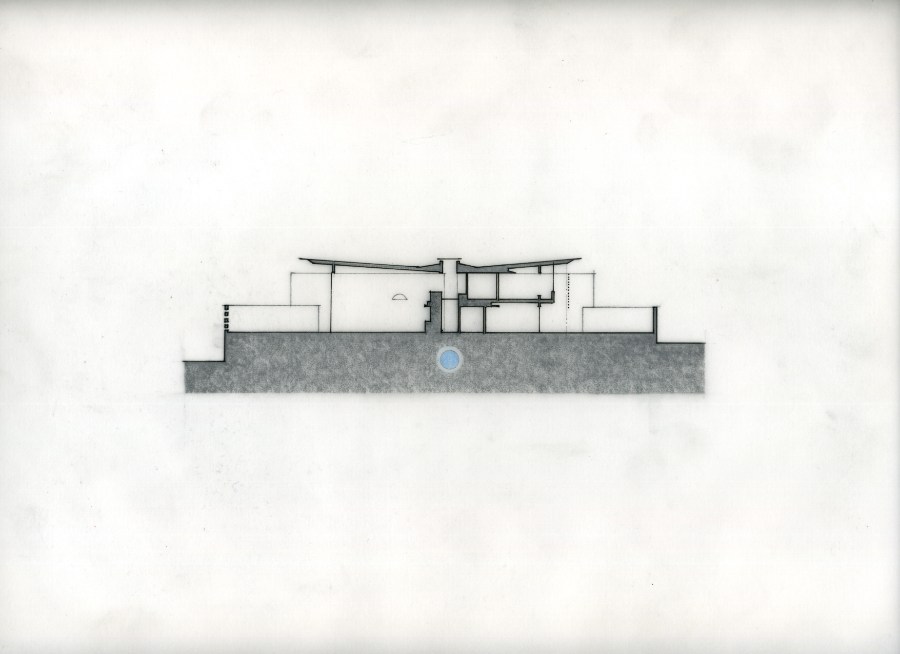
The two-story plan allocated 4,500 square feet of the residential program to accommodate two parents and two junior high-aged children, as well as frequent visitors. The plan was zoned with the family area facing the beautiful natural rock formations to the north, assuring the double-height space with a 40-foot-wide by 20-foot-tall window would never receive direct heat gain.
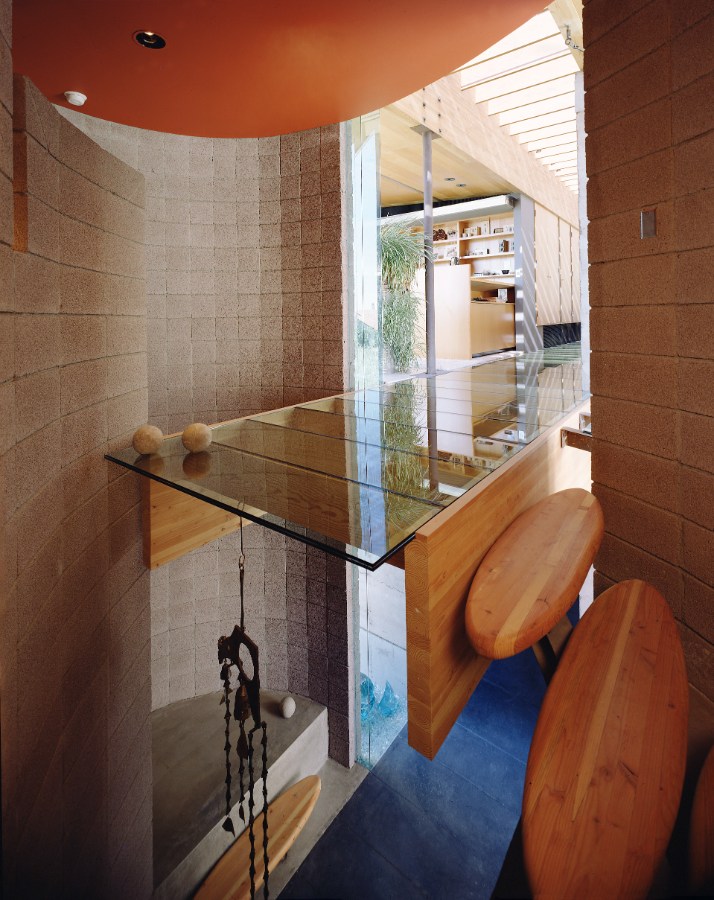
In 1999, a 5-foot-tall Ficus tree was planted in the corner blocked-out floor slab—this tree now brushes the 20-foot ceiling.
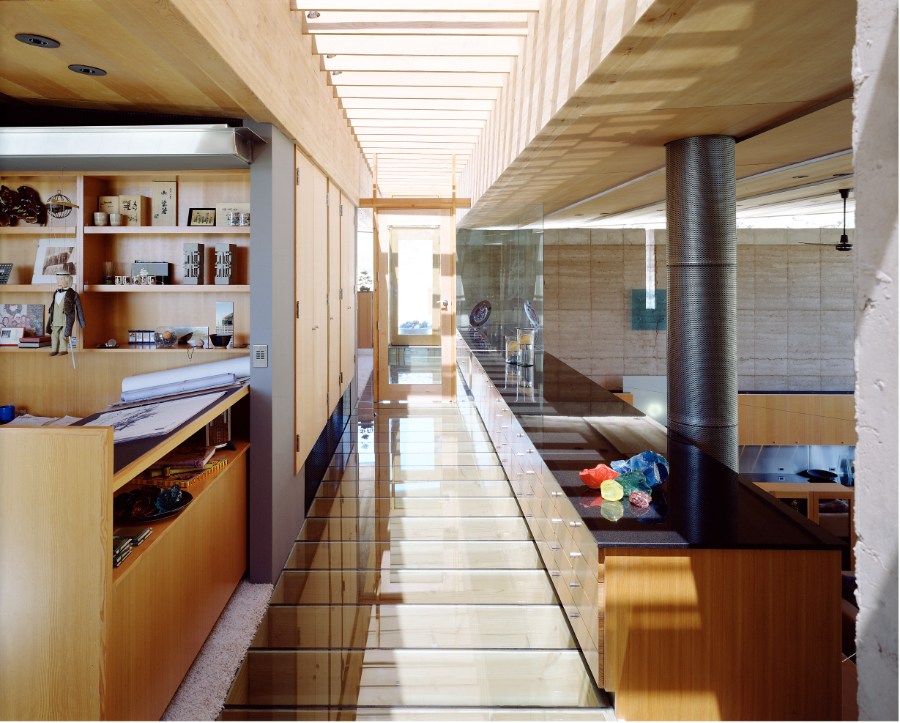
The private spaces were grouped to receive southern light, controlled through a fixed louver. Additionally, the upper-level primary bedroom and studio overlook the tall living area and the surrounding mountain views.
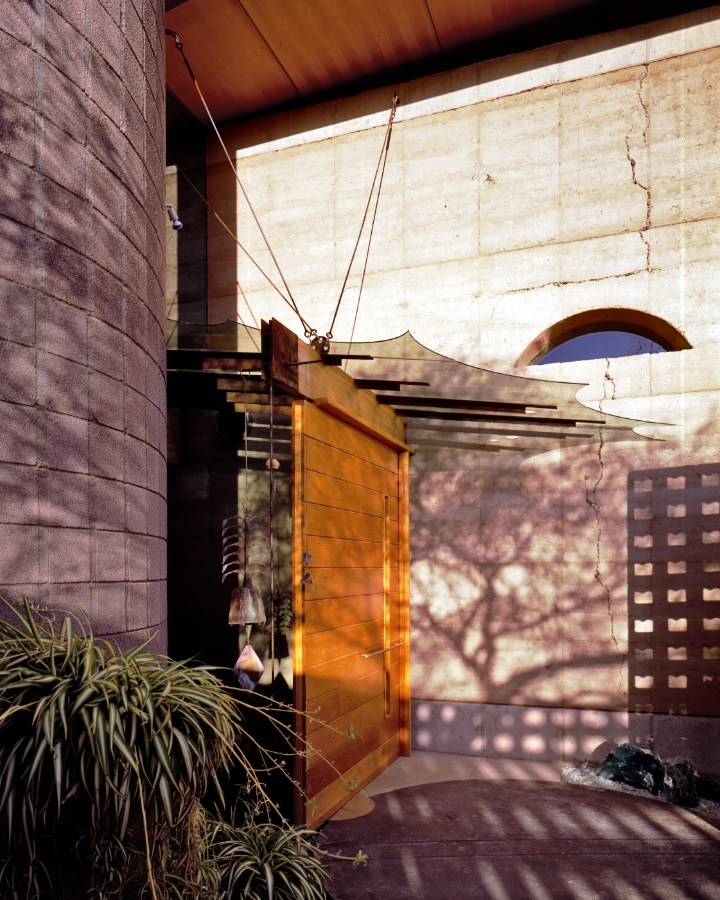
The bearing walls are 2-foot-thick rammed earth, and their interior temperature remains constant.
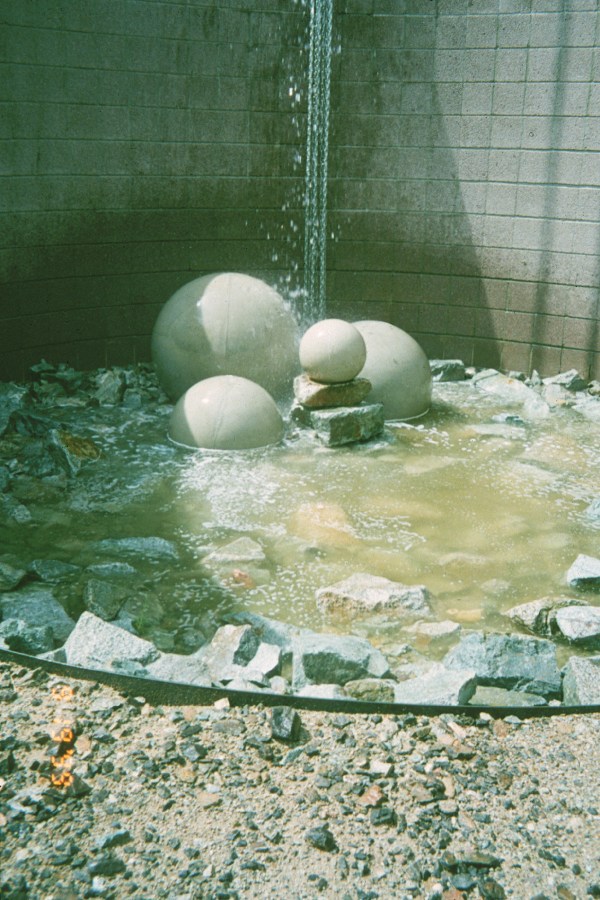
The roof is upside-down relative to other pitched roofs found throughout the neighborhood. Its inverted surface captures what little rainwater we receive and channels it to the above-ground cistern, which, in turn, directs the harvested moisture to various parts of the site—hence, the overgrown impression.
See project photos