2025
| Distinguished Architecture
| Merit
Tom Bonner
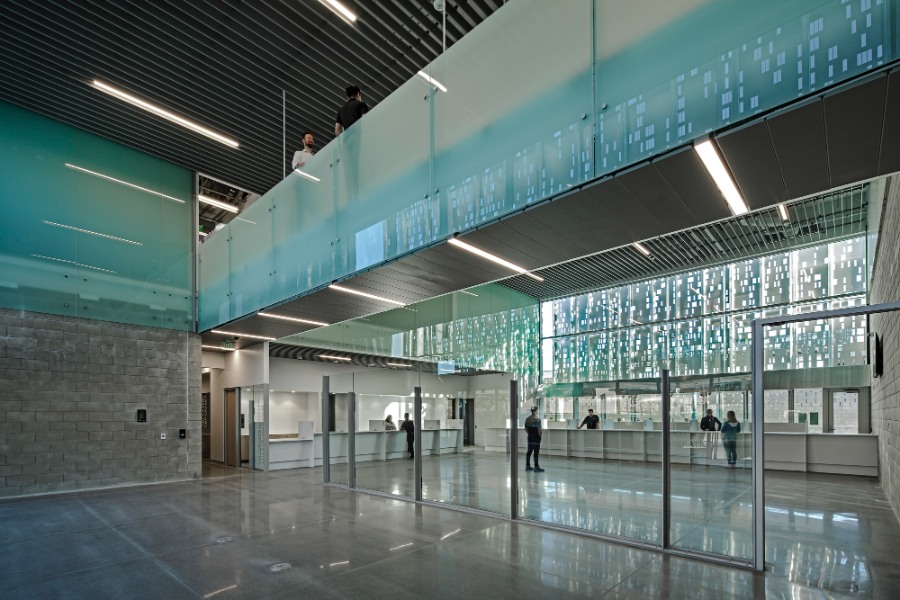
The Otay Mesa Land Port of Entry is the third-busiest commercial border crossing in the United States, serving as a critical gateway between San Diego and Tijuana. Decades of piecemeal development had rendered the site inefficient, visually fragmented, and difficult to navigate. This modernization and expansion project transforms the fractured campus into a model of climate-responsive, sustainable design that honors both security imperatives and community dignity.
Three design principles guided the transformation: Intuitive Movement reorganizes circulation to eliminate vehicular conflicts and create natural wayfinding; Respectful Experience balances security with approachability through careful massing and material choices; and Responsible Utility prioritizes environmental stewardship through every design decision.
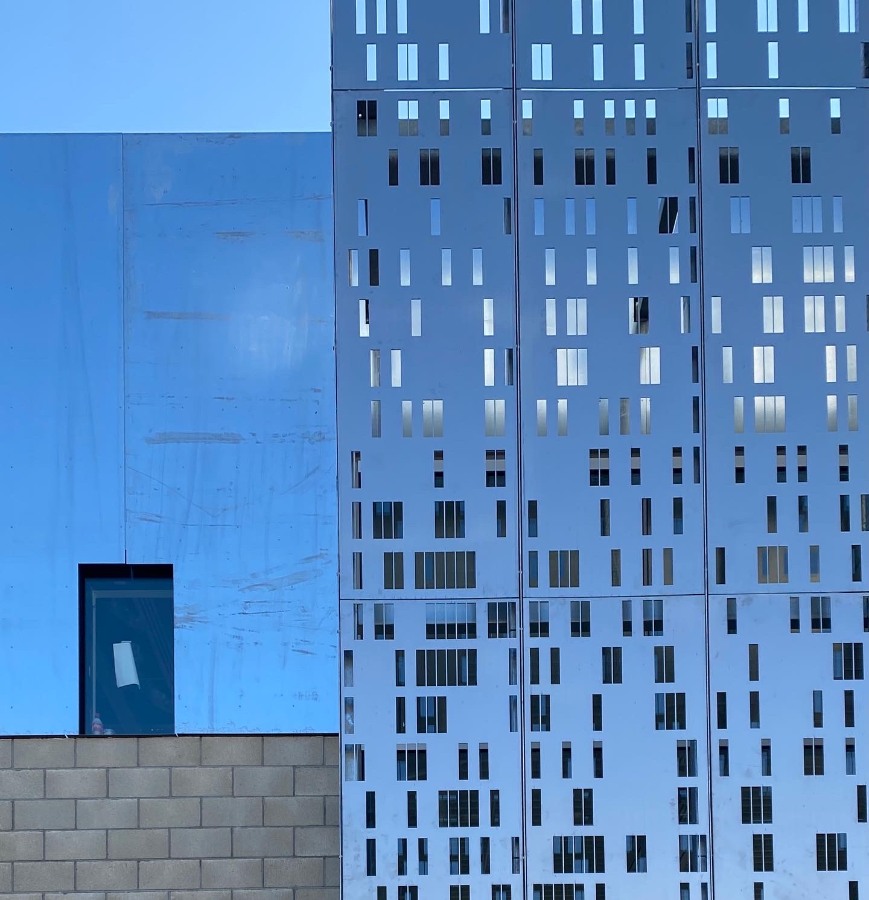
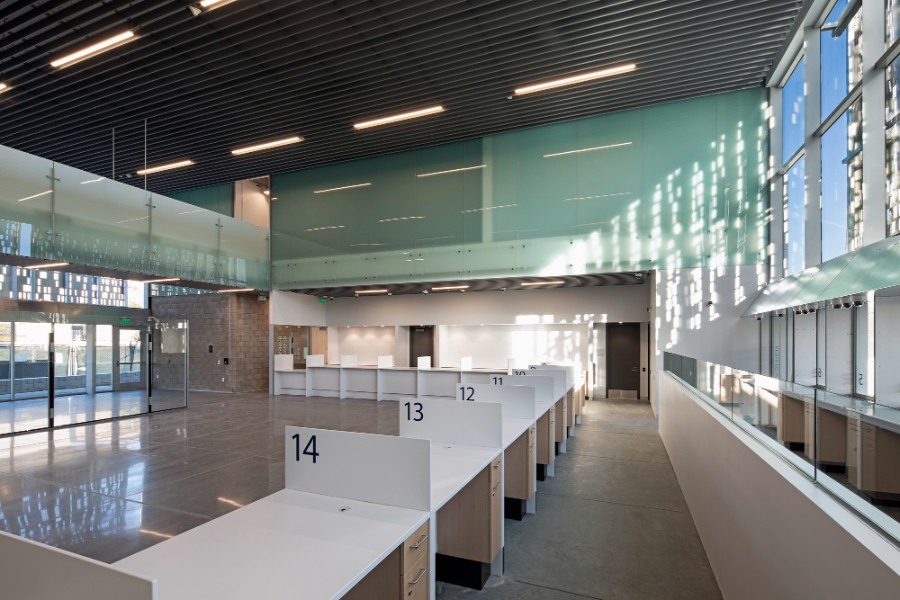
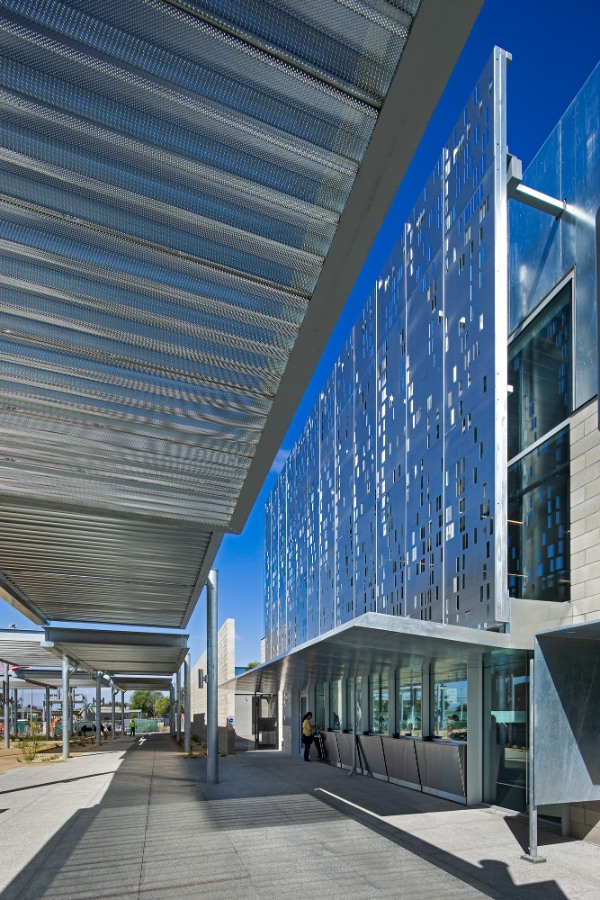
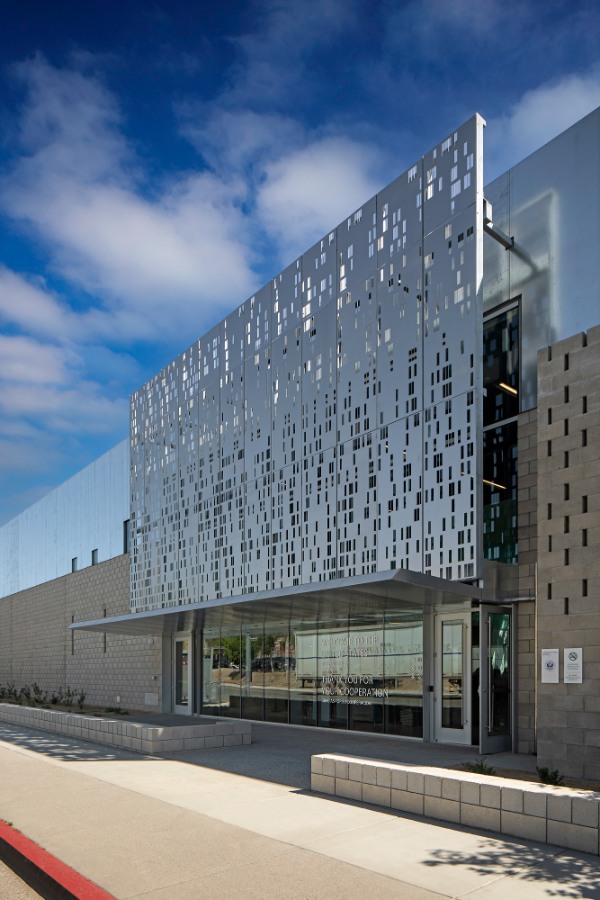
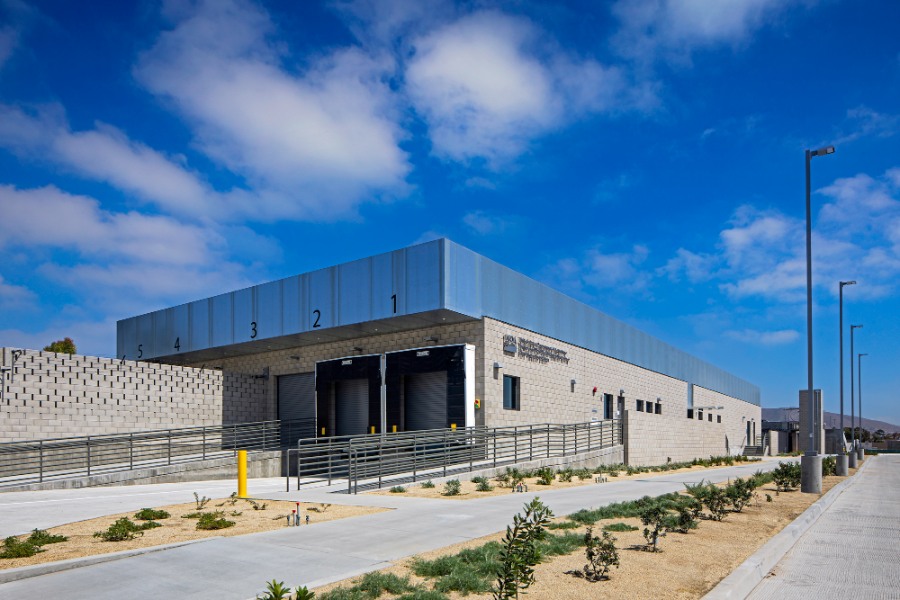
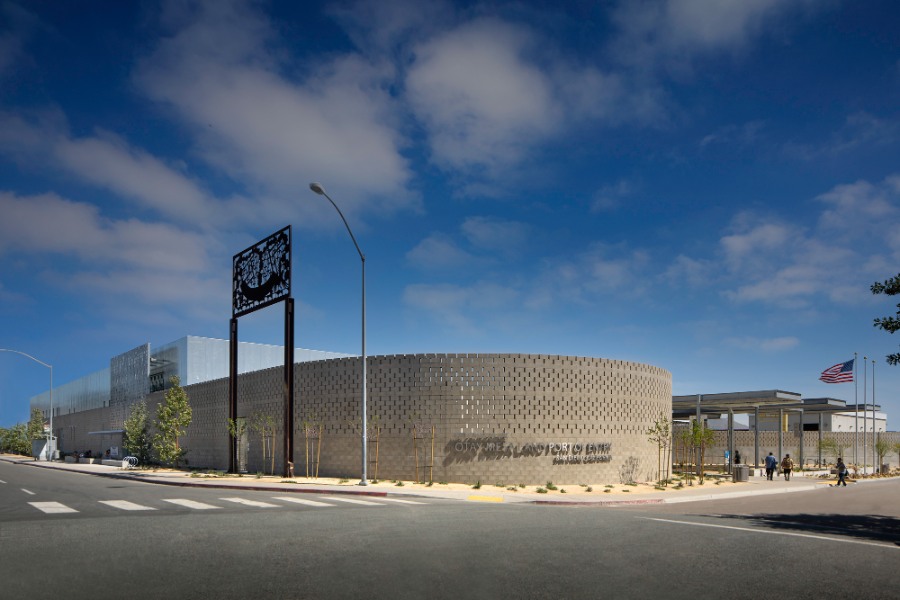
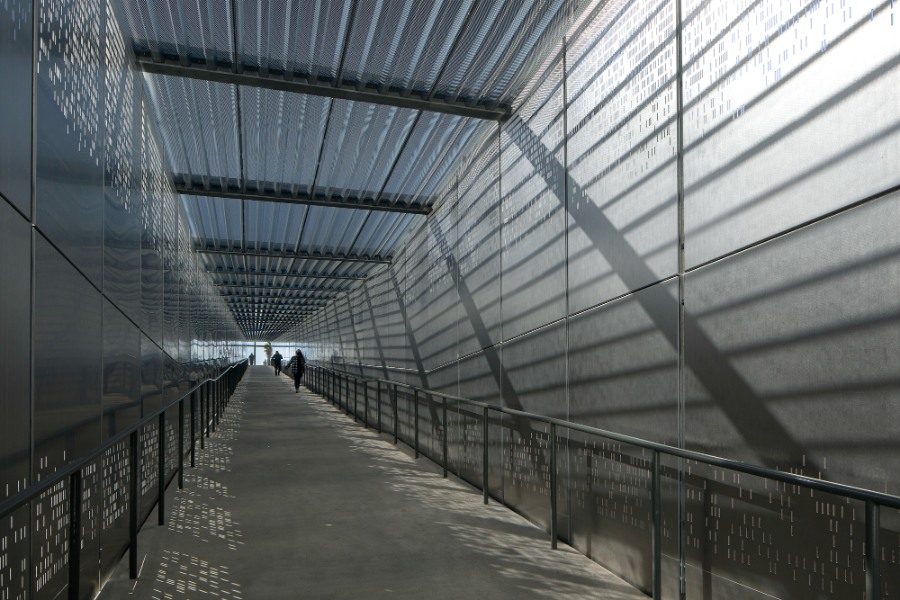
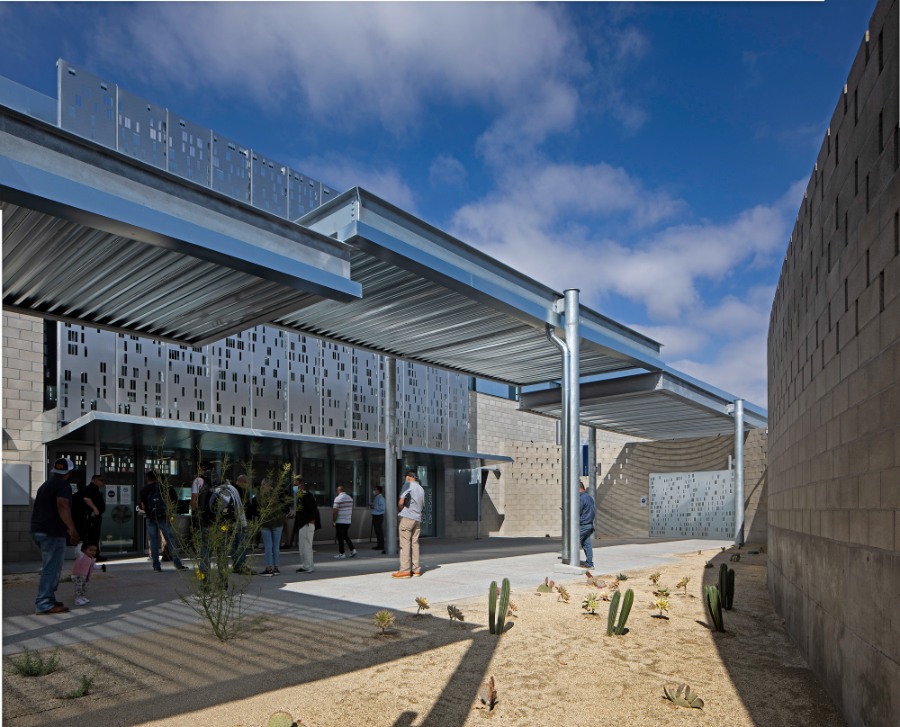
The architectural language celebrates materiality through locally-sourced, exposed concrete masonry bearing walls that provide security and create visual porosity and while ensuring durability in harsh border conditions. Custom perforation patterns in both the masonry and stainless steel façade panels reference native plant communities from the nearby Otay Mountain Wilderness, establishing a deep connection to place. These openings filter daylight by day and glow at night, symbolizing the port’s role as a threshold between nations.
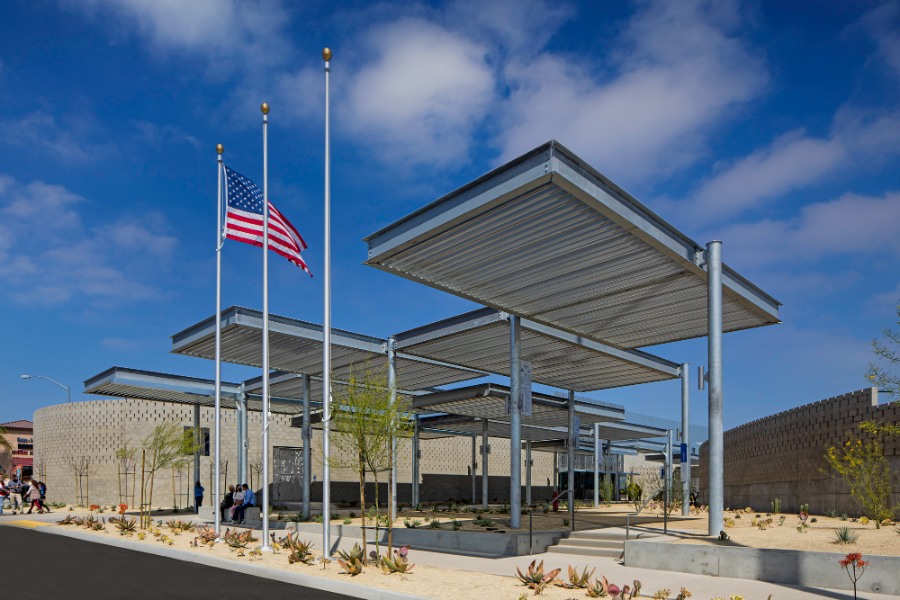
Sustainability is embedded throughout. The Commercial Annex Building achieved LEED Gold and Net Zero Energy certification, while the USDA building achieved LEED Silver. The full site earned SITES Silver certification through a holistic strategy that includes extensive drought-tolerant native landscaping, reduced heat island effect, improved stormwater management, a significant on-site photovoltaic array, and educational signage. Existing structures are renovated rather than demolished, with materials salvaged and reused throughout the expansion, and building orientation maximizes natural light while minimizing solar heat gain.
This once-disjointed port has been reimagined as a cohesive, operationally efficient, and symbolically welcoming threshold—balancing the logistical demands of a major federal facility with the broader civic responsibility of architecture at the border.
See project photos
General Contractor
Atkinson/Clark (JV)
Additional Consultants
Psomas – Civil Engineer; Thornton Tomasetti – Structural Engineer; Southland Engineering – Mechanical Engineer; Syska Hennessy Group – Electrical Engineer/Lighting Designer/AV/IT/Low Voltage; Brightworks – Sustainability Consultant; Chris Winters & Associates – Landscape Architect; SGH – Fire Protection Engineer; Hill International – Owner’s Representative; Davison Associates and DGH – Specifications/Code/Life Safety; Antonio Acoustics – Acoustical Consultant
Size
181,000 sf
Location
San Diego, California